Industrial PVC Strip Barriers and Cheap Curtains Guide
When managing temperature control and noise isolation in commercial or industrial environments, the choice of barrier can significantly impact operational costs. PVC strip curtains provide a high-efficiency, hands-free solution for separating spaces without obstructing the flow of personnel or machinery. Whether you are looking for an energy-saving measure for a cold storage facility or a dust barrier for a workshop, the balance between material durability and initial investment is critical. By utilizing professional-grade PVC, businesses can achieve substantial thermal insulation and acoustic reduction while maintaining a clear line of sight for safety and logistics.

Understanding the Technical Composition of Professional PVC Strip Barriers
The performance of a PVC curtain is primarily determined by its chemical composition and the extrusion process. High-quality curtains utilize specific plasticizers like DOP or DOTP to ensure the material remains flexible even in challenging environments. The material's density, typically ranging between 1.2 and 1.4g/cm³, ensures that the strips have enough weight to return to their original position after being pushed aside, which is essential for maintaining a consistent seal.
From a technical standpoint, the hardness of the PVC (often between 65A and 70A) allows for a balance between structural integrity and the softness required for frequent movement. Furthermore, advanced multiple extrusion and calendering processes ensure that the thickness, ranging from 2mm to 5mm, remains uniform across the entire length of the roll, preventing gaps that would otherwise lead to energy leakage. This level of precision is what distinguishes industrial-grade barriers from generic options.

Operational Benefits Across Diverse Industrial Applications
PVC strip curtains serve as a versatile tool for operational efficiency. In the food and textile industries, they act as a primary defense against airborne contaminants and insects, ensuring a hygienic environment. In cold storage and refrigerated trucks, their ability to withstand temperatures as low as -50°C makes them indispensable for preventing cold air escape, thereby reducing the workload on cooling systems and lowering electricity bills.
Beyond thermal management, these barriers are widely implemented for noise isolation in factories and hospitals. The high elongation rate (up to 200%) allows the material to absorb impact and stress without tearing, providing a long service life even in high-traffic areas. For specialized needs, options such as anti-static or welding curtains are used to protect workers from sparks or prevent electrostatic discharge in electronic assembly lines.
Critical Selection Criteria for Procurement Managers
Procuring the right barrier requires more than just searching for cheap curtains; it requires a detailed analysis of the environment. The first consideration is the working temperature. A standard clear curtain may stiffen in a freezer, whereas a low-temperature specific formula remains pliable. Secondly, the transparency level must be evaluated; while ultra-transparent strips are ideal for safety in automotive interiors or high-rise facades, tinted or off-white strips may be preferred for specific lighting requirements.
The suspension system is another often-overlooked factor. A stainless steel suspension system prevents rust and ensures that the strips hang straight, which is vital for a proper seal. Buyers should also consider the processing service; custom cutting to specific dimensions (e.g., 200mm width) ensures a professional fit and reduces waste during installation. Ensuring the supplier has CE certification provides an added layer of confidence regarding safety and quality standards.
Technical Specification and Application Matrix
| Feature/Parameter | Standard Range | Impact on Performance | Recommended Application |
|---|---|---|---|
| Material Thickness | 2mm - 5mm | Weight and Wind Resistance | Factory/Warehouse |
| Working Temp | -50°C to +80°C | Flexibility and Durability | Cold Storage/Bakery |
| Material Density | 1.2 - 1.4 g/cm³ | Seal Integrity | Air Conditioning Zones |
| Hardness | 65A - 70A | Impact Resistance | High Traffic Doorways |
| Elongation | Up to 200% | Tear Resistance | Industrial Machinery Areas |
Manufacturing Quality and Precision Engineering
Consistent quality in PVC production depends on the stability of the formula and the precision of the equipment. Utilizing 36 leading production lines allows for the scale necessary to meet global demands while maintaining tight tolerances. The use of high-precision laser cutting machines for accessories ensures that there are no burrs and that the appearance is neat, which is critical for professional installations in hospitals or high-end showrooms.
A robust quality control system involves checking the DOP and DOTP levels to ensure the plasticizer does not migrate, which would otherwise cause the curtain to become brittle over time. By focusing on scientific formulas and skilled production, manufacturers can provide a product that offers both high transparency and long-term softness, reducing the frequency of replacements and lowering the total cost of ownership for the end-user.
Future Trends in Industrial Space Partitioning
The industry is moving toward more specialized material science, with a growing demand for "smart" PVC strips that offer enhanced antimicrobial properties for medical environments or increased flame retardancy for chemical plants. As energy efficiency regulations become more stringent globally, the role of thermal barriers will expand, pushing the development of multi-layered strips that offer even higher insulation values without sacrificing the "hands-free" convenience of traditional curtains.
Furthermore, customization is becoming the standard. The ability to imprint company logos on stainless steel accessories or to create tailored strip widths and heights means that these systems are no longer just functional tools but are integrated into the brand identity and architectural flow of a facility. For procurement teams, the focus is shifting from the lowest initial price to the lifetime value, emphasizing durability and energy savings.
Common Technical and Procurement Questions
What is the difference between DOP and DOTP PVC curtains?
DOP and DOTP are different types of plasticizers. DOTP is generally considered more environmentally friendly and has lower toxicity, making it more suitable for applications with stricter health and safety regulations, while both provide the necessary flexibility for the strips.
Can these curtains be used in extremely low-temperature freezers?
Yes, provided you select the low-temperature specific PVC formula. Our materials are designed to work in temperatures as low as -50°C without cracking or becoming too rigid to pass through.
How do I determine the correct thickness for my facility?
Thickness is usually chosen based on traffic volume and wind load. 2mm is sufficient for light foot traffic, while 3mm to 5mm is recommended for heavy industrial use or areas with significant air pressure differences to ensure the strips stay in place.
Are custom sizes and colors available for OEM orders?
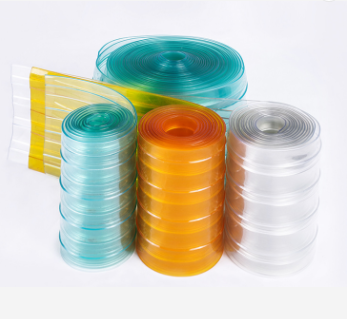
Yes, we offer comprehensive OEM services including custom colors (Brown, Grey, Blue, Off-white), specific thickness requirements, and precision cutting to match your exact doorway dimensions.
How long is the expected service life of a PVC strip curtain?
Service life depends on the environment and traffic. However, due to the use of high-grade PVC and stable formulas, our curtains are designed for long-term use, maintaining softness and transparency over several years of operation.
What are the advantages of using a stainless steel suspension system?
Stainless steel systems provide superior corrosion resistance, especially in humid or cold environments. They ensure the strips remain properly aligned and are far more durable than plastic or painted steel alternatives.
Industry Technical References
- ISO Standards for Plastic Materials
- OSHA Guidelines for Industrial Safety Barriers
- Thermal Insulation Standards in Cold Storage
- CE Certification Requirements for PVC Products
Investing in professional PVC strip systems is a strategic decision for any facility looking to optimize energy use and maintain environmental control. By focusing on material quality and precise engineering, you can ensure a durable solution that serves your operational needs for years to come.
Explore More PVC Solution Insights