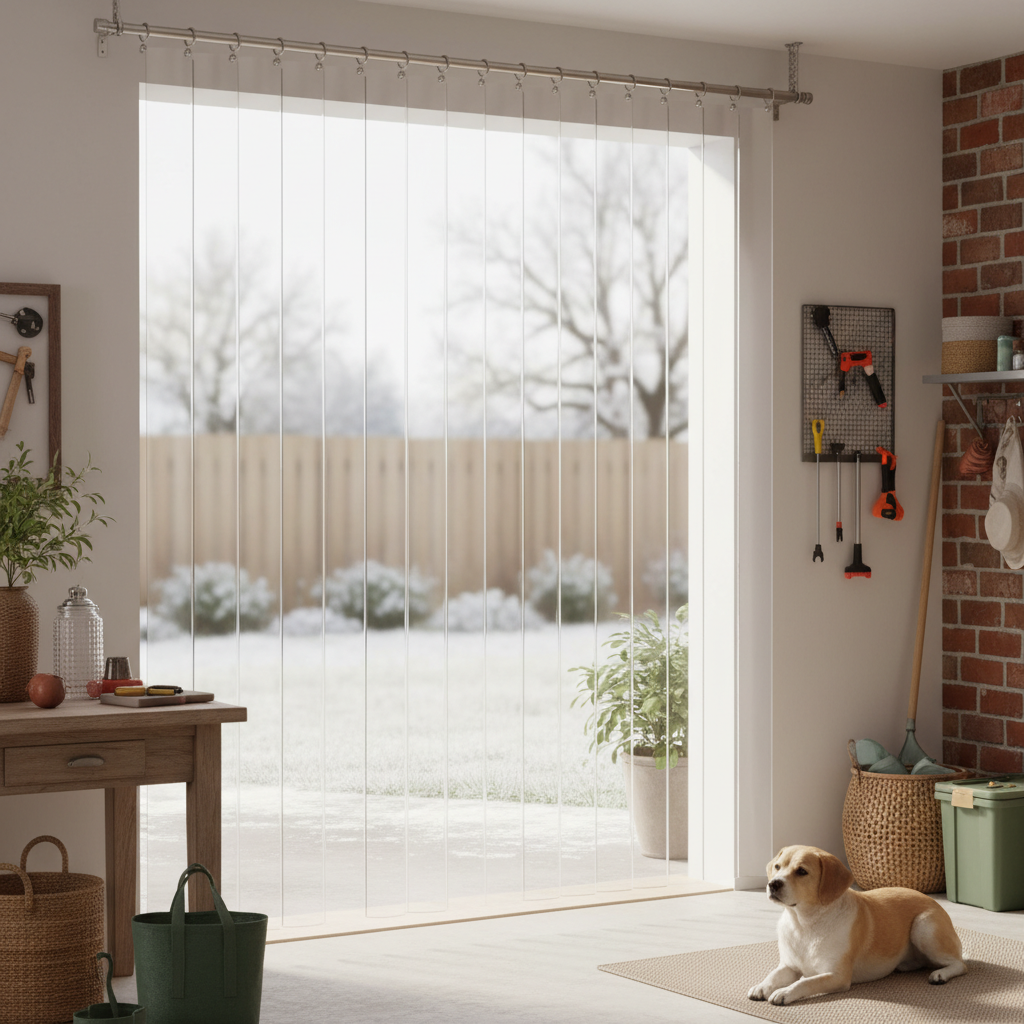
In industrial facility management, the balance between operational efficiency and climate control often hinges on the quality of physical barriers. When evaluating the strip curtains price, procurement managers must look beyond the initial unit cost and consider the total cost of ownership, including material longevity and energy savings.
The challenge lies in selecting a PVC grade that withstands high-traffic frequency without premature degradation. In environments like cold storage or food processing plants, a low-cost but inferior material can lead to excessive air leakage, increasing energy bills and compromising temperature stability, which far outweighs the initial savings.
This analysis examines the technical drivers behind pricing variations in PVC strip curtains, from material thickness and specialized additives to hanging system metallurgy, helping buyers make an informed engineering decision.


The core of PVC strip curtain pricing is the chemical formulation of the polymer. Standard PVC is modified with plasticizers to achieve the necessary flexibility. Higher-grade curtains, such as Polar or anti-insect types, utilize specialized additives that maintain molecular stability at temperature extremes.
For instance, low-temperature curtains must remain pliable at -50°C to prevent cracking, requiring a more complex chemical structure than standard room-temperature barriers. This material shift directly influences the overall cost and performance in refrigerated logistics.
Thickness is a primary determinant of structural life. Available options typically range from 1mm to 7mm. A 2mm curtain is suitable for light traffic and noise isolation, whereas a 3mm or 5mm curtain is required for heavy-duty industrial doorways to resist wind load and frequent physical impact.
Width specifications (ranging from 150mm to 500mm) affect the overlap and sealing efficiency. Greater overlap improves the thermal seal but increases the resistance for personnel and equipment moving through the curtain, creating a trade-off between energy efficiency and operational flow.
The density of the material, typically between 1.2-1.4g/cm³, ensures the curtains hang plumb. If the density is too low, the strips may curl or flutter in air currents, leading to gaps that compromise the isolation of air conditioning or noise.
In engineering terms, the hardness of the PVC—often measured between 65A and 70A—determines the curtain's ability to return to its original shape after deformation. A softer curtain is easier to traverse but may wear out faster in high-friction environments.
Furthermore, the choice of hanging system—Stainless Steel vs. Galvanized Iron—adds another layer of cost and durability. Stainless steel is essential for hospitals and food-grade environments due to corrosion resistance, while galvanized options suffice for general warehouse use.
Evaluating the efficiency of various PVC curtain types requires a normalized assessment. Factors such as thermal insulation, light transmission, and wear resistance vary based on the material grade and thickness.
The following data represents a normalized engineering rating where a higher score indicates superior performance for that specific metric across common industrial configurations.
In cold storage and refrigerated trucks, the primary goal is the isolation of air conditioning to prevent energy loss. Polar smooth clear or ribbed curtains are deployed here to ensure that the thermal barrier remains intact even during frequent loading and unloading cycles.
In contrast, hospital and clinic environments prioritize isolation and hygiene. Anti-static and high-transparency PVC strips are used to create barriers that prevent dust and contaminant migration while allowing medical staff to maintain clear lines of sight for safety.
The industry is shifting toward more sustainable PVC formulations that reduce the reliance on phthalate plasticizers without compromising flexibility. This evolution is driven by stricter global environmental regulations in the European and North American markets.
Another emerging trend is the integration of antimicrobial additives directly into the PVC matrix. This is particularly relevant for food processing and pharmaceutical cleanrooms, where the curtain itself can serve as a secondary layer of contamination control.
We also anticipate a move toward "smart" barrier systems where strip curtains are combined with automated sensors to optimize the opening and closing cycles, further reducing the energy footprint of large-scale industrial warehouses.
Selecting the correct configuration requires mapping the operational environment to the material's technical limits. A mistake in thickness or grade can lead to premature replacement costs, significantly impacting the long-term budget.
The following matrix provides an engineering baseline for matching curtain configurations with specific industrial needs, focusing on the relationship between specifications and use cases.
Buyers should use this as a preliminary guide and verify the specific operating temperature and traffic volume with the manufacturer's technical documentation.
| Configuration Type | Thickness/Material | Operating Factor | Recommended Use Case |
|---|---|---|---|
| Basic Isolation | 1.0mm - 2.0mm Standard | Light Traffic / Noise | Office / Small Shop |
| Thermal Barrier | 2.0mm - 3.0mm Polar | Low Temp / High Seal | Cold Storage / Freezers |
| Heavy Duty | 3.0mm - 5.0mm Ribbed | High Impact / Wind | Industrial Doorways |
| Hygiene Grade | 2.0mm High Transparency | Clear Sight / Sterile | Hospitals / Clinics |
| Specialized Protection | Custom Thickness Anti-static | ESD Control / Safety | Electronics Assembly |
| Extreme Environment | 5.0mm - 7.0mm Reinforced | Maximum Durability | Heavy Machinery Areas |
The price is primarily driven by the PVC material grade (e.g., Polar, anti-insect, or standard), the thickness of the strips (ranging from 1mm to 7mm), and the choice of the hanging system (Stainless Steel vs. Galvanized Iron). Specialized additives for low-temperature flexibility or anti-static properties also increase the cost due to the more complex chemical formulation required to maintain stability across different working temperatures.
Thickness directly correlates with the curtain's resistance to physical deformation and wear. While a 2mm curtain is sufficient for low-traffic areas, it will degrade quickly in heavy-duty industrial settings. A 3mm or 5mm thickness provides the structural integrity needed to withstand frequent impact from forklifts or personnel and resist "curling" caused by wind loads, thereby extending the replacement cycle.
For environments below -30°C, Polar PVC strip curtains are the engineering standard. Standard PVC becomes brittle and cracks at low temperatures, whereas Polar grade is specifically formulated to maintain flexibility and transparency down to -50°C. This ensures the curtain remains a functional thermal barrier without shattering upon impact in cold storage applications.
Yes, PVC curtains act as a physical mass barrier that reduces the transmission of high-frequency airborne noise. The effectiveness depends on the thickness and the overlap of the strips. A thicker configuration (3mm+) with a tighter overlap provides a more substantial acoustic barrier, making them suitable for isolating noisy machinery from office areas or clinics.
Ribbed curtains feature longitudinal ridges that provide additional structural stiffness, helping the strips remain straight and resist curling in wind-prone areas. Smooth curtains offer slightly better visibility and are easier to clean, making them preferable for sterile environments. The choice depends on whether the priority is structural stability in air currents or maximum transparency and hygiene.
The choice is based on the corrosivity of the environment. Stainless steel (SUS 201/304) is mandatory for food processing, pharmaceutical, and medical facilities where moisture and cleaning chemicals are prevalent. Galvanized iron is a cost-effective alternative for dry warehouse environments where corrosion is not a primary concern. Using the wrong system can lead to premature hardware failure and curtain sagging.
The analysis of strip curtains price reveals that the most economical choice is not the one with the lowest initial cost, but the one that matches the material specification to the environmental stress. By prioritizing the correct thickness and polymer grade, facilities can significantly reduce energy leakage and maintenance frequency.
Ultimately, the transition from standard to specialized PVC barriers—such as Polar or anti-static grades—represents a strategic investment in operational reliability. For enterprises seeking a balance of quality and cost control, consulting with a manufacturer that offers a full range of molds and technical support is essential for optimizing industrial climate control.