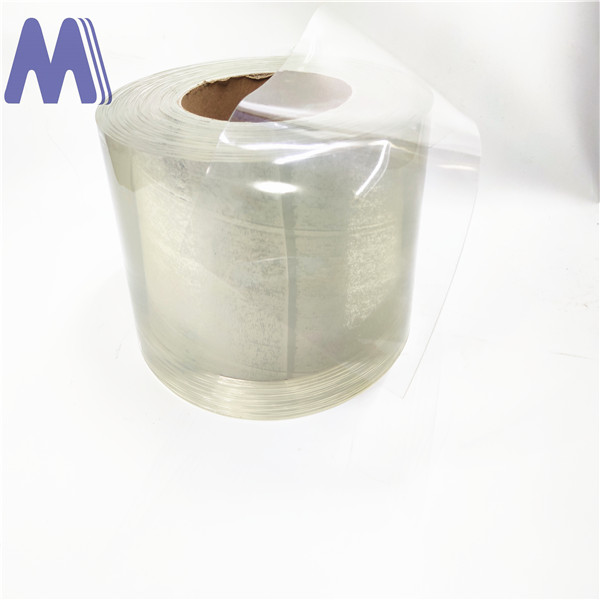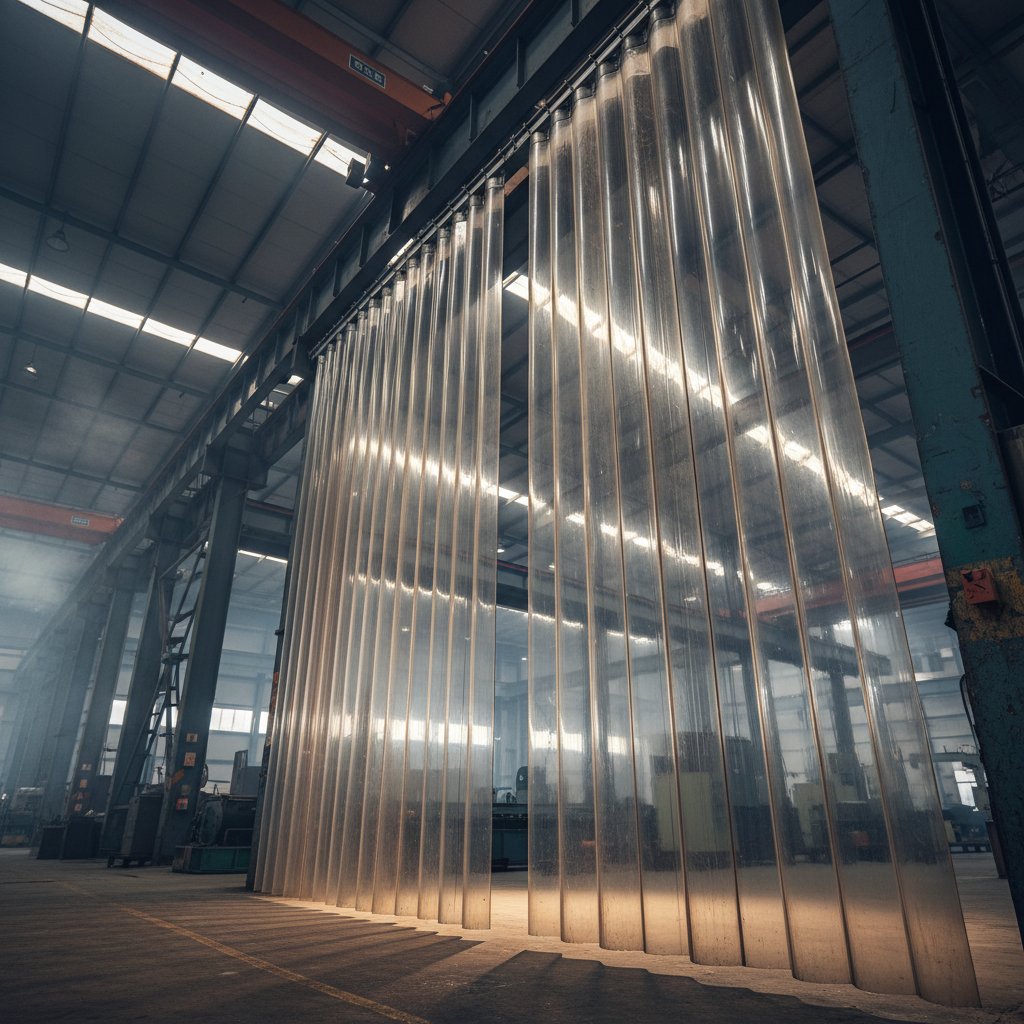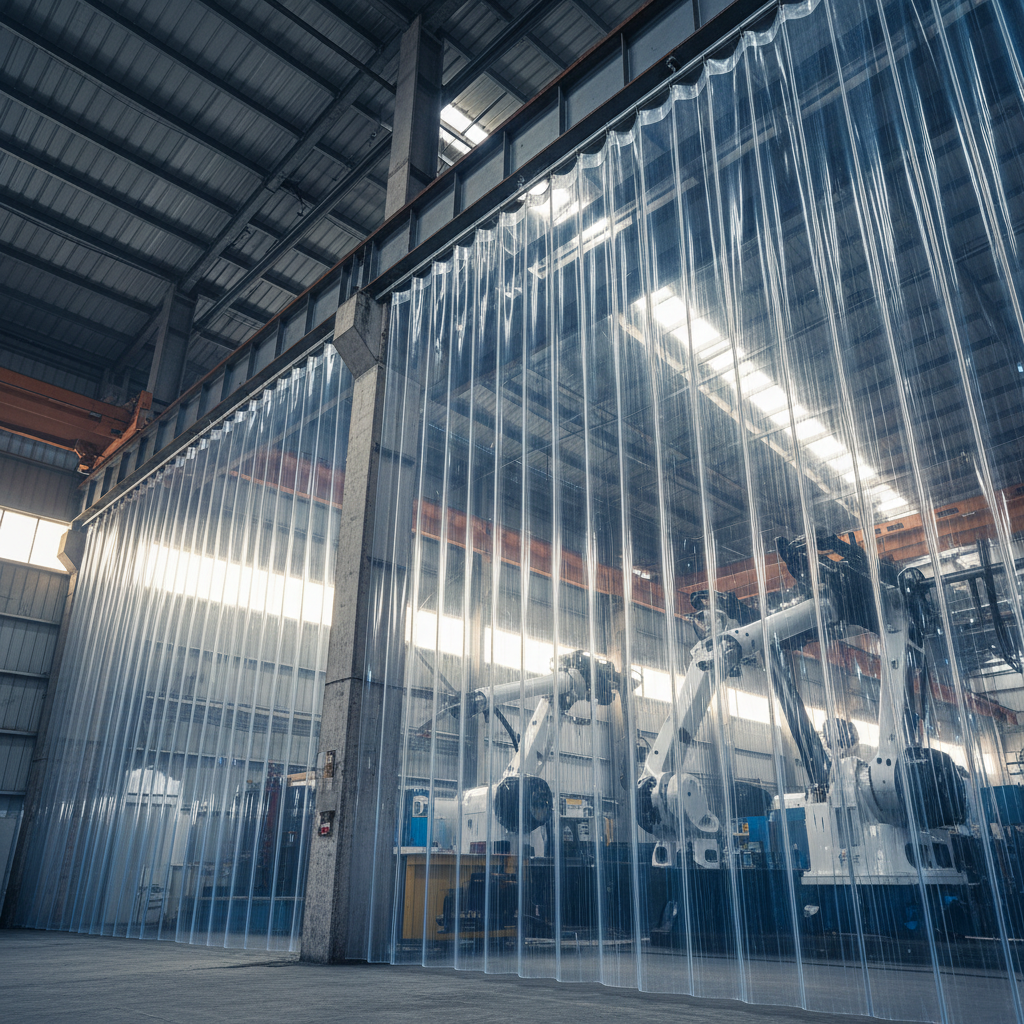
PVC strip curtains manufacturers provide essential industrial partitioning solutions designed to regulate indoor environments without obstructing the flow of personnel or machinery. These flexible barriers, crafted from high-grade polyvinyl chloride, serve as a primary defense against thermal loss, airborne contaminants, and noise pollution in diverse operational settings.
For many facility managers in the plastic products and non-metallic mineral sectors, maintaining a stable microclimate is a constant struggle. Traditional doors often fail to balance accessibility with insulation, leading to increased energy costs and compromised product quality due to dust or temperature fluctuations.
This comprehensive guide examines the technical specifications, application scenarios, and procurement criteria for selecting the right PVC strip curtain system, helping you optimize operational efficiency while reducing long-term maintenance overhead.

1Understanding PVC Strip Curtain Technology

At its core, the technology employed by professional pvc strip curtains manufacturers involves the extrusion of specialized PVC resins that are formulated for specific physical properties. Whether it is the ultra-transparent grade for visibility or polar-grade for cold storage, the molecular structure is adjusted to ensure the material remains flexible at varying temperatures without cracking or losing its shape.
These systems typically consist of the PVC strips themselves and a stainless steel or galvanized iron suspension system. The hardware must be engineered to withstand the constant tension and movement of the strips, ensuring that the curtain closes seamlessly to maintain the environmental seal.
Modern manufacturing processes now allow for a wide variety of specialized curtains, including anti-static, anti-insect (yellow-tinted), and arc-light resistant versions, each catering to a specific industrial risk or requirement.
2Core Features of High-Performance Industrial Curtains
High-quality PVC curtains are characterized by their balance of transparency and durability. Professional manufacturers ensure that the material possesses high tensile strength to prevent stretching over time, which would otherwise create gaps and compromise the insulation effectiveness of the barrier.
Another critical feature is the edge finish. Precision laser cutting ensures that the strips are uniform in width and length, which is essential for a tight overlap. This overlap is what prevents air leakage and keeps insects or dust from penetrating the controlled area.
Sustainability and safety are also paramount. Many manufacturers now offer flame-retardant options that meet international safety standards, reducing the risk of fire spread in industrial warehouses or chemical processing plants.
3Application Scenarios and Environmental Fit
The versatility of PVC strip curtains allows them to be deployed across numerous industries. In the food and textile sectors, super transparent curtains are used to maintain hygiene and temperature while allowing supervisors to monitor production lines without entering the sterile zone.
In cold storage and refrigerated trucks, polar PVC curtains are indispensable. They prevent the escape of chilled air during loading and unloading, which directly reduces the load on refrigeration units and lowers electricity costs.
Furthermore, in heavy machinery workshops, these curtains act as an effective baffle against noise and sparks. By partitioning the space, manufacturers can isolate loud processes or welding stations, improving the overall safety and comfort of the workspace.
4Comparative Performance Analysis
When comparing a facility using professional PVC curtains versus one relying on standard doors or no barriers, the difference in energy efficiency is stark. PVC curtains provide a continuous seal that adapts to the shape of the opening, minimizing the "chimney effect" where warm air rises and escapes.
Data indicates that properly installed curtains can reduce heat loss in warehouses by up to 30% during winter months. This is achieved by creating a thermal buffer zone that stabilizes the interior temperature regardless of external weather conditions.
pvc strip curtains manufacturers Performance Metrics
Beyond thermal control, the reduction in dust infiltration is a major operational gain. In environments like painting booths or precision engineering, the prevention of airborne particulates translates directly into lower reject rates and higher product quality.
5Procurement and Installation Best Practices
Selecting a supplier requires a deep dive into their production capabilities and material certifications. It is essential to verify if the manufacturer uses virgin PVC or recycled materials, as the latter often has inferior transparency and a shorter lifespan.
Installation must be precise to ensure longevity. The suspension system, whether it is a stainless steel SUS 304 track or a galvanized iron hanger, should be securely anchored to the lintel. Incorrect installation can lead to the curtains sagging, which increases wear and tear on the material.
Customization is often necessary. Professional pvc strip curtains manufacturers can provide tailored widths and thicknesses (from 2mm to 5mm) to balance the need for flexibility with the requirement for wind resistance and durability.
6Material Limitations and Maintenance Needs
Despite their advantages, PVC curtains are not without limitations. They can be susceptible to scratching from sharp objects and may yellow over time if exposed to intense UV radiation without a specialized coating. This is why UV-resistant grades are recommended for outdoor-facing entrances.
Maintenance is the key to maximizing the return on investment. Over time, PVC strips can accumulate grime, oil, or dust, which obscures visibility and can attract pests. Regular cleaning with mild soap and water is required to maintain transparency.
Periodic inspection of the suspension hardware is also necessary. Loose bolts or bent hangers can cause the strips to hang unevenly, creating gaps that defeat the purpose of the installation. Replacing individual worn-out strips is a cost-effective way to maintain the system without full replacement.
7Selection Guide for Different Industrial Needs
Choosing the right curtain depends entirely on the operational environment. A food processing plant has vastly different needs than a cold storage warehouse or a welding shop. The following table provides a decision matrix for common scenarios.
By aligning the material properties—such as temperature resistance, anti-static capabilities, and transparency—with the specific pain points of the facility, managers can ensure an optimal balance between cost and performance.
| Application | Recommended Type | Primary Benefit | Key Consideration |
|---|---|---|---|
| Cold Storage | Polar Grade PVC | Thermal Retention | Low-temp flexibility |
| Food Industry | Super Transparent | Hygiene & Visibility | FDA/Food-grade safety |
| Electronics | Anti-Static PVC | ESD Protection | Conductive properties |
| Warehouses | Standard Clear | Dust/Wind Barrier | Durability vs Cost |
| Chemical Plants | Ribbed / Heavy Duty | Impact Resistance | Chemical compatibility |
| Agriculture | Anti-Insect (Yellow) | Pest Control | Light wavelength filter |
Ultimately, collaborating with an experienced manufacturer allows for a customized solution that considers the height of the opening, the frequency of traffic, and the specific environmental stressors of the site.
Frequently Asked Questions
Conclusion
Implementing a high-quality PVC strip curtain system is one of the most cost-effective ways to improve the energy efficiency and environmental control of an industrial facility. By selecting the correct material grade and ensuring a precise installation, businesses can significantly reduce operational costs while improving the safety and comfort of their workspace.
For organizations evaluating the best thermal or partitioning solutions for their specific operational needs, detailed product specifications and customization options can be reviewed at www.lfwanmao.com.