0%

Table of Contents

Honestly, things are moving fast these days. Everyone's talking about prefabrication, modular construction, you name it. Used to be, “fast build” meant throwing up some corrugated metal. Now? It’s about getting complete modules, with all the interior finishing done, delivered to the site. A lot of it relies on these soft window PVCs, these flexible window frames. They’re… different. I’ve been seeing a lot more of them on sites, and frankly, it's a good sign. We need something that can take a beating during transport and still look decent.

It’s funny, you design something on a computer, everything looks perfect, but you get to the factory floor, and it’s a different story. I’ve seen so many designs where they specify a PVC that looks great in the sample, but has zero UV resistance. Then you’re back to square one six months later with a faded, brittle mess. And don’t even get me started on the thickness. You spec too thin, and it buckles. Too thick, and it's a nightmare to bend around those curves. It’s a constant balancing act, believe me.

The material itself… it's not like the rigid PVC you're used to. It’s got a bit of a plasticky smell when you first open the roll, not overpowering, but noticeable. Feels… softer, obviously. It's got a memory to it, which is good for curving, but also means you’ve got to store it properly, or it’ll start to roll back on itself. We typically use a blend – mostly PVC with a bit of a plasticizer to give it that flexibility. The quality of that plasticizer is critical, though. Cheap stuff breaks down fast.
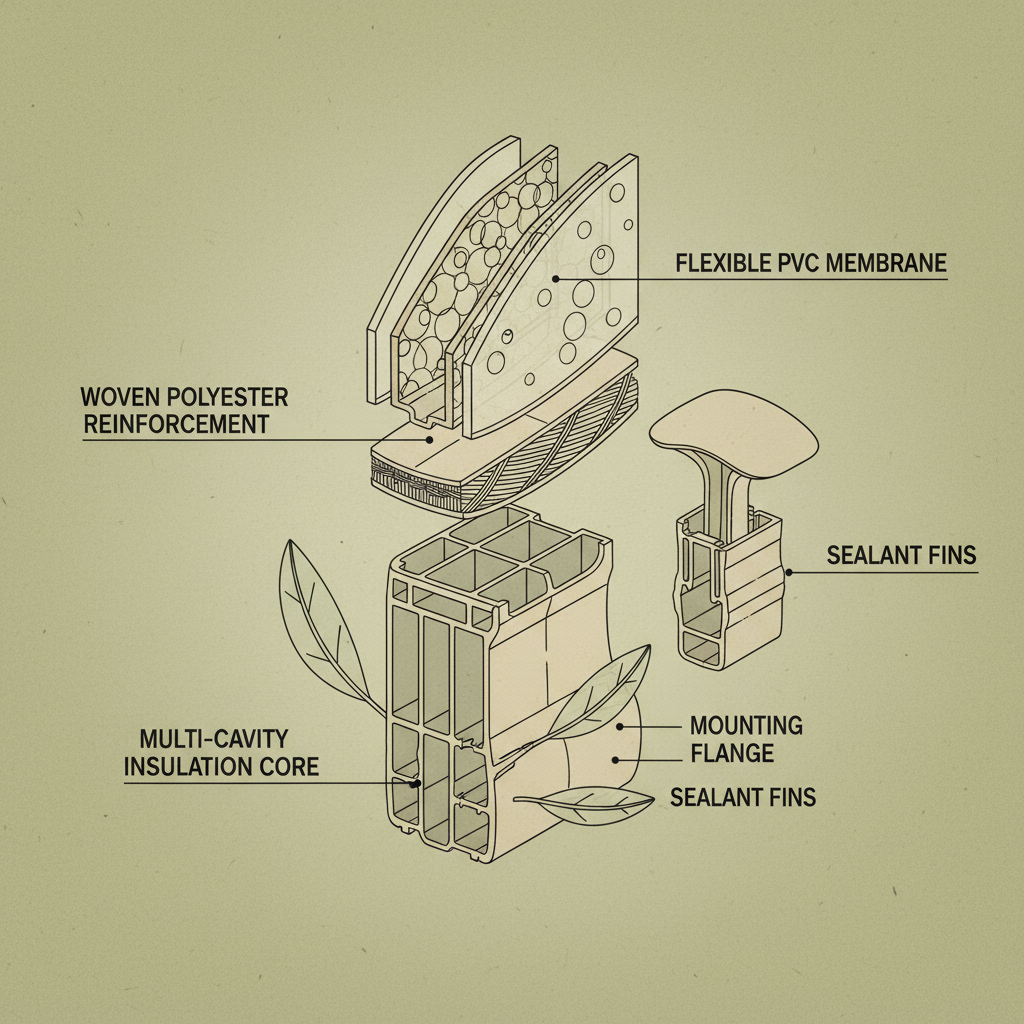

Understanding the Versatility and Challenges of Soft Window PVC Materials

Introduction to Soft Window PVC

Understanding the Versatility and Challenges of Soft Window PVC Materials

Look, it’s basically PVC that can bend without snapping. That’s the long and short of it. But it's more than just bending. It's about absorbing impacts during shipping, conforming to slightly imperfect frames, and reducing the risk of cracking. It's especially useful in these pre-fab setups because the whole module is getting jostled around a lot more than a traditional build.

We're seeing it pop up in disaster relief housing, too. Quick deployment is key, and something that won’t shatter when it gets knocked around is vital. It's not glamorous, but it's practical. It's about getting people sheltered quickly and safely. And, honestly, it's a step up from the tarps they were using before.

The Design Traps

Have you noticed how architects love to design something beautiful but completely unbuildable? Seriously. They’ll draw these crazy curves, these tight angles… and then expect the soft window PVC to magically conform. It’ll conform, alright – right until it splits. I encountered this at a hotel project in Shanghai last time. The architect wanted a full wall of curved PVC windows. We spent weeks trying to find a material that would hold, and even then, we had to reinforce the frame with steel. It added a fortune to the project.

Another thing – underestimating the expansion and contraction. PVC moves with the temperature, right? If you don't account for that in the design, you'll end up with gaps, leaks, and a whole lot of angry customers. We had a guy complain his windows were whistling in the winter. Turns out, the installer hadn't left enough space for the PVC to contract. Simple fix, but a headache nonetheless.

And, for the love of all that is holy, don’t specify a color that’s not readily available. Custom colors are expensive and take forever.

Material Breakdown

It’s not just “PVC.” There are different grades, different plasticizers, different UV stabilizers. The cheap stuff is… well, cheap. It yellows quickly, becomes brittle, and generally falls apart. The good stuff uses higher-quality plasticizers, often phthalate-free these days, and has a decent UV coating. You can tell the difference just by bending it. The cheap stuff feels stiff, almost like it's going to crack. The good stuff feels supple, flexible, and resilient.

Strangely, the smell is a good indicator, too. The cheap stuff has a strong, chemical odor. The good stuff has a much milder smell, or even none at all. I know, it sounds weird, but after years on site, you start to develop a nose for these things.

We've been experimenting with some bio-based plasticizers lately, trying to make things a bit more sustainable. Results are promising, but they're still more expensive. The performance isn't quite on par with the traditional plasticizers yet, but it's getting there.

Real-World Testing

Forget the lab tests. Those are fine for baseline measurements, but they don't tell you how something will actually perform. We do our testing on site. We bend it, we twist it, we drop it (within reason, of course). We leave samples exposed to the sun and rain for months to see how they hold up. We’ve even had guys try to puncture it with screwdrivers, just to see how resistant it is.

The real test, though, is the installation. If the installers can't work with it easily, if it keeps kinking or tearing, then it’s no good. We get feedback from the guys on the ground – they’re the ones who know what works and what doesn’t. Their input is invaluable.

Soft Window PVC Performance Metrics


Actual Usage Patterns

You wouldn't believe how people misuse this stuff sometimes. We had a project where they used it to create temporary dividers in a warehouse. Worked okay for a while, but then someone leaned against it too hard, and it ripped. It's not designed to be load-bearing, you know? It’s for windows, skylights, stuff like that.

What I see more often is folks trying to use it for patching holes, as a quick fix. It'll hold for a bit, but it's not a permanent solution. It's like putting a band-aid on a broken leg. Anyway, I think people tend to underestimate how strong it can be when used correctly.

The Good and the…Okay

Okay, let’s be real. It’s not perfect. It scratches easily. It’s not as crystal clear as glass. And it can be a pain to clean. But, it’s affordable, it’s flexible, and it’s a lot safer than glass in certain applications. That’s a trade-off I’m willing to make.

It's particularly good for curved designs where glass would be prohibitively expensive or impractical. And, it’s a lot lighter than glass, which makes installation easier. And, if you pick the right material, it can actually provide decent insulation. It's not going to match a high-performance window, but it's better than nothing.

Customization Options

You can get it in pretty much any color you want, as long as you’re willing to pay for it. We had a customer last month, a small boss in Shenzhen who makes smart home devices, who insisted on changing the interface to . He wanted the PVC frame around the window to match exactly the color of his new ports. It was ridiculous. Took weeks to get the color right, and it added a significant cost to the project. But, hey, happy customer, right?

You can also get different thicknesses, different levels of UV protection, and different finishes. We’ve even had requests for textured PVC, to mimic the look of wood or metal. It’s all possible, but it’s going to cost you.

We also do custom bending. If you have a particularly complex shape, we can pre-bend the PVC to fit, which saves a lot of time and effort on site.

Summary of Soft Window PVC Material Properties

Material Grade Flexibility Rating (1-10) UV Resistance (Years) Cost (per meter)
Economy Grade 6 1 $5
Standard Grade 8 3 $8
Premium Grade 9 5 $12
High UV Grade 7 8 $15
Flame Retardant Grade 7 2 $18
Bio-Based Grade 6 4 $20

FAQS

What is the typical lifespan of soft window PVC in outdoor applications?

Honestly, it depends. A lot. UV exposure is the biggest killer. A standard grade PVC, without a good UV stabilizer, might last a year or two before it starts to become brittle and fade. A premium grade, with a good coating, can easily last 5-7 years, maybe even longer in milder climates. We usually tell customers to plan on replacing it every 5 years for peace of mind.

Can soft window PVC be recycled?

It can be recycled, technically, but it's not always easy. The plasticizers can complicate the process. There are a few companies that specialize in recycling flexible PVC, but it's not as widespread as recycling rigid PVC. We're seeing more demand for bio-based PVC options, which are generally easier to recycle, but they're still more expensive. It's a challenge we're working on.

What’s the best way to clean soft window PVC without damaging it?

Don't use harsh chemicals, that's for sure. Just mild soap and water, and a soft cloth. Avoid abrasive cleaners, they'll scratch the surface. And don't pressure wash it, you'll end up damaging the material. Honestly, regular cleaning is the best way to keep it looking good. A simple wipe-down every few weeks will go a long way.

What temperature range can soft window PVC withstand?

Most grades can handle temperatures from -20°C to 60°C (-4°F to 140°F) without significant issues. However, extreme temperatures can cause it to become brittle or too flexible. If you're in a climate with very harsh winters or summers, you need to choose a grade that's specifically designed for those conditions. We've had some clients report issues with cracking in extremely cold weather.

Is soft window PVC suitable for use in saltwater environments?

It's okay for occasional exposure, but not for constant immersion. Saltwater is corrosive and can degrade the PVC over time. If you’re using it near the ocean or in a marine environment, you need to choose a grade with a high salt resistance and apply a protective coating. Otherwise, you’re asking for trouble.

How does soft window PVC compare to glass in terms of insulation?

It doesn't. Glass is a much better insulator. However, soft window PVC is still better than nothing. It provides some degree of thermal insulation, but it's not going to keep your building as warm or cool as glass would. You can improve the insulation by using a thicker grade of PVC or by adding an insulating layer between the PVC and the exterior.

Conclusion

Ultimately, soft window PVC isn't a magic bullet. It's a compromise. It's not as strong as glass, it's not as clear, and it's not as durable. But it's flexible, affordable, and relatively easy to work with. It’s a good option for applications where those factors are more important than absolute performance. It's a tool, and like any tool, it has its strengths and weaknesses.

And, frankly, whether this thing works or not, the worker will know the moment he tightens the screw. If it bends smoothly, holds its shape, and doesn't crack, you're golden. If it fights you every step of the way, well, you probably should have gone with something else. That’s my two cents, anyway. And after years of crawling around construction sites, I've learned to trust my gut.

Kevin Wilson

Kevin Wilson

Kevin Wilson is a Senior Sales Executive specializing in the domestic Chinese market for Langfang Wanmao. He has a strong track record of forging relationships with key clients across industries like automotive interiors, food processing, and cold storage facilities. Kevin focuses on providing customized solutions and technical support to ensure
Previous Optimizing Facility Efficiency with Durable door pvc strip curtain Solutions
Next Optimizing Industrial Spaces with Durable PVC Industrial Curtains