



CE Compliance Guide for Stainless Steel PVC Strip Curtain Brackets
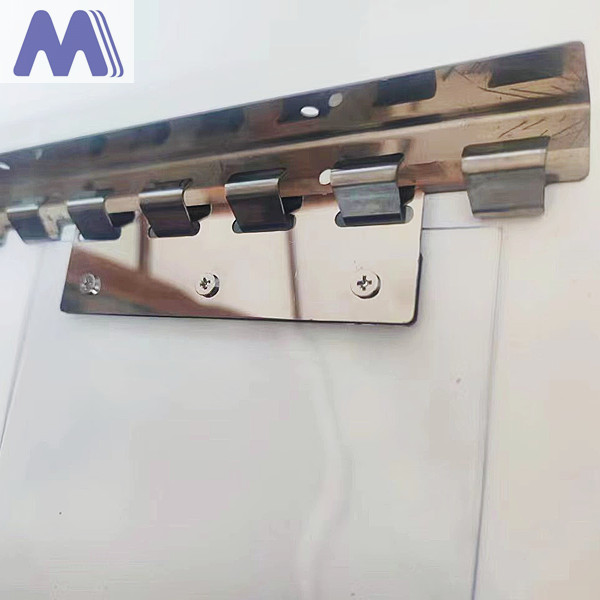
Importing compliance officers evaluating hardware for PVC strip curtain installations must balance material selection against operating environments. Target market entry depends heavily on verifiable compliance documentation that avoids unverified claims or unsupported regulatory assertions.
Procuring importing compliance officers need clear structural baselines before approving any industrial purchase. Material choices and standardized lead times dictate whether a component fits specific commercial installation requirements.
CE certification is available for this product. Corresponding compliance files can be requested directly from the supplier.
Material Options for Environmental and Budgetary Demands
Evaluating Metal Grades Across Operational Environments
Project environments dictate whether a specific facility requires General iron, S.S.201, or S.S.304 to manage daily structural loads and moisture exposure effectively. Commercial kitchens and industrial processing facilities deploy grade S.S.304 to maintain structural integrity under frequent cleaning cycles. Residential and standard office environments frequently utilize S.S.201 or General iron depending on humidity levels and intended project longevity.
Procuring importing compliance officers review these material tiers to match structural performance limits with site-specific installation demands. Mechanical resilience varies across the three options, influencing how brackets withstand mechanical stress over extended operational periods.
| material | application | Primary Corrosion Resistance Profile | Cost Tier |
|---|---|---|---|
| S.S.304 | other commercial spaces | High resistance to moisture and chemical exposure | High |
| S.S.201 | commercial spaces | Moderate resistance suitable for controlled indoor humidity | Intermediate |
| General iron | homes, offices | Low moisture resistance requiring dry indoor placement | Low |
Budgetary Alignment and Material Selection Tiers
Procurement teams balance initial capital expenditure against long-term maintenance costs by selecting the appropriate metal tier for each designated zone. Facilities with strict humidity controls can deploy General iron to minimize upfront expenditure without accelerating surface wear. Projects exposed to corrosive cleaning agents rely on S.S.304 to prevent premature structural degradation across commercial strip curtain installations.
Selecting the correct grade ensures that the physical properties match the operational demands of offices, homes, and industrial spaces.
Dimensional Specifications of Rails and Clips
Dimensional Parameters of Rails and Brackets
Precise dimensional control prevents assembly friction during strip curtain installations across different architectural openings. Rail sizing is fixed at 1.0 meter in length with a 1.2 cm thickness to standardize support across all deployment types. Component matching depends directly on the designated PVC strip overlap and the physical dimensions of the doorway.
Facility planners cross-reference installation metrics with local wind loads and traffic volume inside refrigerated storage or high-traffic corridors. Dimensional verification ensures that the installed strips maintain proper vertical alignment without binding.
| Component Type | Size Parameters | Application Boundary |
|---|---|---|
| Rail size | 1m(length)*1.2cm(thickness) | Standard overhead mounting across homes, offices, and other commercial spaces |
| Clips size | 150mm(width) 200mm(width) 300mm(width) 400mm(width) 500mm(width) | Staple hanging mechanism matching varying PVC strip widths |
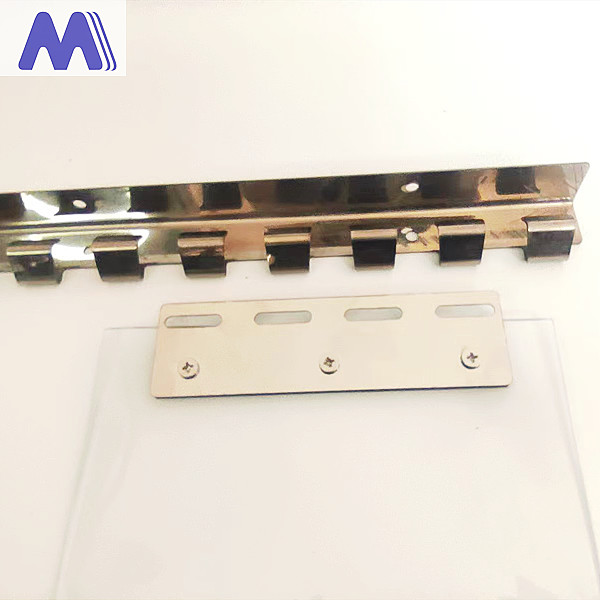
Evaluating Component Sizing for Structural Integrity
Clips are manufactured in five distinct widths: 150mm, 200mm, 300mm, 400mm, and 500mm. Warehouse managers deploy the 150mm and 200mm variants for narrow pedestrian doorways, whereas the 400mm and 500mm variants accommodate wide industrial loading bays. This dimensional variety allows facility teams to scale overlapping strip curtains across diverse architectural layouts.
Operational stability is maintained by fastening the overhead rail securely before mounting individual suspension clips. Exact spacing measurements prevent lateral slipping when forklifts or personnel pass through the PVC barrier.
CE Certification Availability and Document Requests
Verifying CE Certification Availability for Import Compliance
Importing compliance officers verify destination market entry requirements directly against available documentation packages provided by the manufacturer. Destination ports require clear paperwork trails to satisfy regional customs and hardware distribution standards.
Shipment validation relies on requesting the appropriate file sets before dispatch occurs.
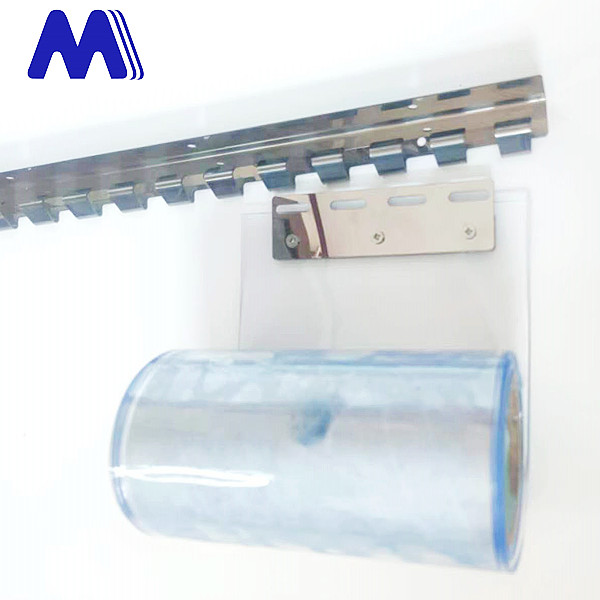
Managing Regulatory Boundaries and Exclusions
Procurement teams maintain strict adherence to verifiable facts by excluding any unlisted directives from their import paperwork. Invented certificate numbers, unauthorized issuing bodies, and fabricated validity dates are completely omitted from project files.
Checking incoming shipment paperwork depends on direct communication channels rather than unverified public registries. Compliance officers cross-reference received documents against active commercial agreements depending on the chosen material tier and shipment volume.
Regulatory Scope and Non-Verification Boundaries
Administrative Boundaries of Compliance Status
Import compliance officers evaluate regulatory status using verifiable documentation boundaries rather than relying on unverified administrative claims. Evaluating compliance status independently protects importers from destination port holds and unexpected regulatory friction. Managing documentation limits requires direct access to trade channel disclosures.
Exclusion of Unauthorized Frameworks
Hardware parameters operate independently of unlisted international standardization bodies unless officially documented within shipment dossiers. Importing compliance officers must avoid connecting these components to unverified directives during risk assessments. Manufacturing claims exclude any association with unauthorized regulatory frameworks.
Documentation Transparency Limits
Target market entry depends strictly on verifiable paperwork provided through official trade channels. Regulatory boundaries shift depending on destination port requirements and order scale variables. Facilities reviewing these specifications rely on transparent disclosure rather than inflated compliance promises.
Order Fulfillment and Production Lead Times
Managing Import Schedules Around Operational Windows
Global supply chain logistics require precise timing parameters to coordinate sea freight bookings and inland transit milestones effectively. Import managers build contingency buffers into their purchasing timelines to absorb potential port congestion and customs inspection delays. The standard lead time of 5-7 workdays governs initial factory processing before goods release for international dispatch.
Shipment planning depends on calculating exact manufacturing durations alongside regional logistics transits. Delivery expectations remain manageable when procurement teams align their reorder points with factory output intervals.
Fulfillment Initiation Triggers and Payment Milestones
Production scheduling initiates only after the financial transaction clears and all technical parameters receive formal approval. Buyer compliance officers verify that clip widths, rail lengths, and metal grades are locked prior to this milestone to prevent costly assembly discrepancies. Modifying purchase orders after the processing window opens introduces unavoidable delays to the dispatch schedule.
Commercial execution relies on synchronizing payment clearance with final specification sign-off.
| Workflow Stage | Trigger Condition | Operational Impact |
|---|---|---|
| Specification Review | Finalized order quantities | Prevents manufacturing errors |
| Payment Clearing | Funds transfer completion | Starts the 5-7 workday production clock |
| Dispatch Release | Factory quality verification | Initiates international transit bookings |
Compliance Verification and Procurement Integration
Streamlining Import Operations Through Unified Verification
Coordinating material grades, dimensional measurements, and compliance files ensures that shipments clear customs without administrative delay.
Procuring importing compliance officers manage documentation by verifying that every batch matches the exact ordered metal tier and clip width before dispatch.
Practical Checklist for Cross-Referencing Documentation
Import teams execute structured validation reviews against target market rules by examining the following checkpoints prior to final payment authorization:
- Verify that the invoice specifies whether the order uses S.S.201, S.S.304, or General iron to prevent material mix-ups on site.
- Confirm that the listed clip dimensions cover the required widths from 150mm up to 500mm without missing endpoint sizes.
- Ensure that destination port logistics accommodate the 5-7 workday production lead time following payment confirmation.
Utilizing this verified parameter checklist protects import workflows from unexpected inventory discrepancies or compliance holds.
Frequently Asked Questions
The manufacturing lineup includes S.S.201, S.S.304, and General iron. Importers select these options based on the target installation environment and project budget. Each material tier influences upfront procurement costs differently depending on the specific metal grade chosen for the order.
CE certification is available for this hanging system product line to support target market entry. Importers review the compliance status during their initial sourcing assessment. Access to relevant documentation depends on the specific commercial agreement established during the inquiry stage.
Order fulfillment requires a standard timeframe of 5 to 7 workdays. This production clock initiates strictly after the payment and technical requirements are confirmed. Bulk buyers integrate this operational window into their shipping schedules to maintain predictable delivery timelines.
Manufacturing commences only after the commercial payment clears and all structural requirements are fully finalized. Any revisions to material selections or clip widths after this milestone will adjust the dispatch schedule. Sourcing officers coordinate payment clearances promptly to secure the 5-7 workday operational window.
Metal grade selection dictates corrosion resistance when deploying brackets in humid areas. Higher stainless tiers provide different surface longevity compared to General iron under equivalent atmospheric conditions. Importers evaluate local humidity levels against the chosen material tier to determine expected operational lifespans.
Conclusion
Finalizing the procurement parameters depends on the specific destination port requirements and total order volume negotiated by the importing organization.
Confirming these variables ensures smooth dispatch operations without unexpected logistical friction during international transit.