



Stainless Bracket for PVC Strip Curtain Hanging System Applications
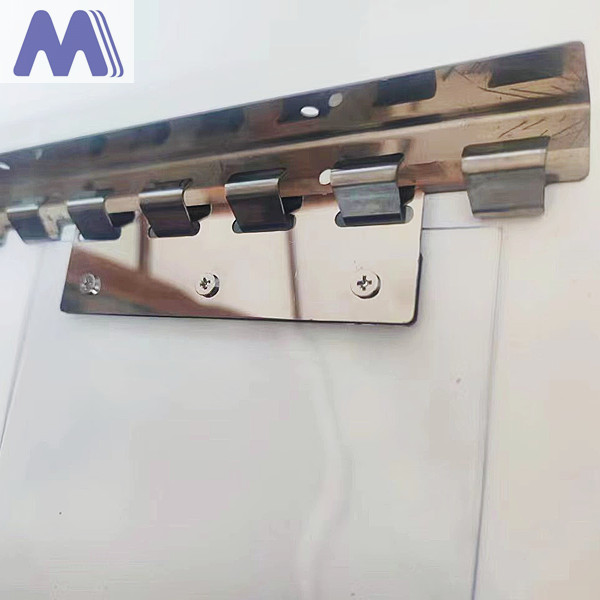
Selecting appropriate hanging hardware for PVC strip curtains prevents premature operational failure in warehouses, distribution centers, and high-traffic commercial environments. Facility engineers and MRO procurement managers must evaluate material grades, dimensional layouts, and fulfillment timelines before finalizing purchase orders.
Operational conditions dictate whether installation teams choose S.S.201, S.S.304, or general iron brackets for their facilities.
Strictly aligning hardware specifications with strip curtain dimensions and delivery schedules secures long-term structural integrity.
Matching Stainless Steel Grades to Indoor and Moisture Environments
Environmental Impact on Hanging Hardware Longevity
Operating environments in warehouses and distribution centers dictate the physical durability of hanging hardware used for PVC strip curtains. High humidity, temperature fluctuations, and airborne particulate levels directly accelerate wear on metal components across industrial facilities.
Corrosive elements present in specific commercial settings can compromise untreated or low-grade metal within months. Consequently, facility engineers must match material specifications to the exact atmospheric conditions of the installation site.
Material Grade Applications and Selection Boundaries
Three material options address distinct environmental requirements across industrial spaces: S.S.201, S.S.304, and general iron.
| material | application | Suitable Environment | Unit Cost Tier |
|---|---|---|---|
| S.S.304 | other commercial spaces | High-moisture and corrosive areas | Higher tier dependent on raw material grades |
| S.S.201 | offices | Standard indoor commercial spaces | Mid tier for standard commercial deployment |
| General iron | homes | Dry, budget-sensitive indoor areas | Lower tier focused on economy |
S.S.304 serves demanding locations where moisture levels remain consistently high. S.S.201 suits standard indoor commercial spaces and offices where moisture exposure is limited. General iron options cater to budget-sensitive dry environments in homes or protected storage rooms.
Balancing Moisture Levels and Budget Constraints
Material selection must align strictly with moisture levels and budget constraints without assuming unstated alloy specs. Procurement teams evaluate these parameters to prevent premature structural failure in high-traffic openings.
When operating conditions involve aggressive cleaning agents or exterior weather exposure, higher-grade stainless steel mitigates long-term maintenance costs. Conversely, dry indoor partitions permit the use of more economical iron alternatives without sacrificing immediate structural integrity.
Configuring Rail Modules and Dimensions for Strip Curtain Installations
Structuring Rail Layouts for Strip Curtain Installations
Rail modules serve as the structural backbone of PVC strip hanging systems, dictating the alignment and stability of every mounted clip. Precise dimensional planning prevents installation misalignment across extensive warehouse and commercial openings.
Installation layouts rely on a fixed rail length of 1m paired with a 1.2cm thickness. These standardized dimensions allow facility contractors to calculate exact linear requirements for multi-bay doorways and high-traffic loading docks.
Balancing Structural Load and Support Spacing
The 1.2cm material thickness provides adequate rigidity to support hanging hardware without bending under daily operational stress. Contractors must calculate total linear coverage by multiplying the 1m rail segments according to the exact width of the doorway.
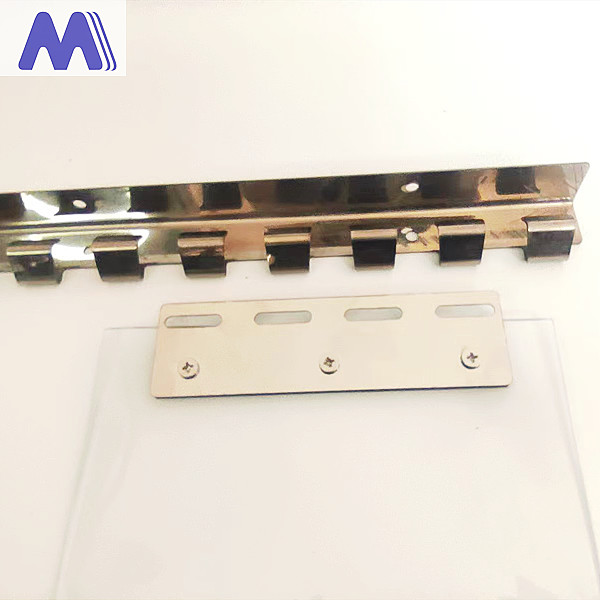
Accurate measurement of mounting surfaces avoids structural gaps between adjacent rail modules. This dimensional consistency ensures that hanging clips glide smoothly and maintain correct overlap geometry throughout the lifespan of the installation.
Selecting the Correct Clip Width for PVC Strip Overlap Control
Precise clip width selection determines the physical overlap ratio and sealing performance of flexible barriers across doorways and loading bays. Installation contractors must match each hardware dimension directly to the specific PVC strip width deployed at the facility.
Configuring Clip Sizing for Optimal Curtain Overlap
The hardware system provides five discrete clip sizing options to accommodate different operational requirements. These widths are 150mm, 200mm, 300mm, 400mm, and 500mm.
- 150mm clips suit lightweight pedestrian doorways and low-clearance openings.
- 200mm and 300mm clips serve standard warehouse traffic zones and internal partitions.
- 400mm and 500mm clips handle heavy industrial forklift pathways exposed to strong drafts.
Omitting any of the five discrete sizing options during specification compromises the structural integrity of the entire hanging assembly, especially when varying strip widths are required across different facility zones.
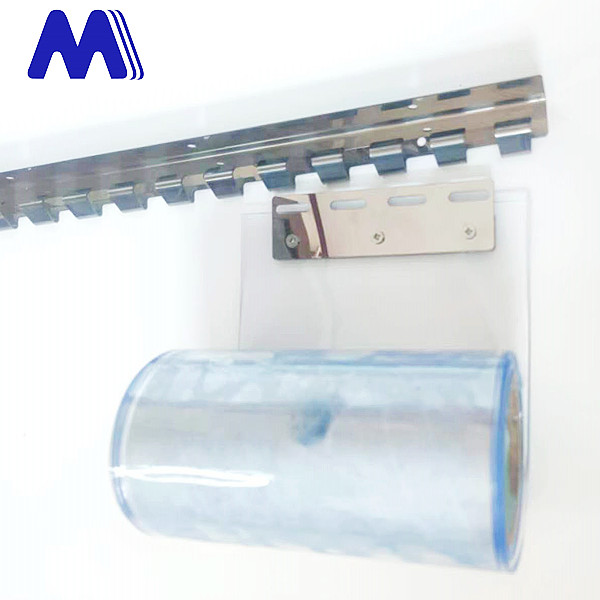
Specification Matrix for Hardware Dimensions
| Component Type | Available Size Options | Primary Application Setting |
|---|---|---|
| Hanging Clips | 150mm, 200mm, 300mm, 400mm, and 500mm | Industrial and commercial strip curtain overlap control |
| Mounting Rails | 1m length with 1.2cm thickness | Overhead structural support across doorways |
Contractors evaluate total opening widths against these discrete measurements to calculate the exact number of clips required. Sizing accuracy depends strictly on the intended overlap percentage and wind load conditions at the installation site.
Evaluating Facility Requirements Against Material and Sizing Options
Systematic planning for heavy-duty openings relies on cross-referencing site exposure variables with appropriate metal compositions. Facility engineers use specific decision matrices to evaluate moisture concentration, mechanical stress loads, and budget boundaries prior to installation.
Integrating the fixed 1m rail length, 1.2cm thickness, and selected clip widths requires a cohesive layout that prevents structural binding. Contractors align these physical components systematically across high-traffic thresholds to ensure uniform weight distribution and stable strip suspension.
Common Hardware Mismatch Risks
Thermal fluctuations and persistent airborne moisture create severe corrosion risks in unsuited metal installations. Selecting general iron alternatives for high-humidity washdown zones or aggressive chemical environments invariably leads to rapid structural degradation and unexpected maintenance expenses.
Execution Framework for Complex Openings
Purchasing teams mitigate premature hardware failure by matching clip dimensions directly to individual door frame capacities and traffic intensity. Operating parameters dictate whether S.S.201, S.S.304, or general iron options serve as the optimal choice for long-term operational reliability.
Detailed verification schedules depend entirely on the specific quantity ordered and the designated port of destination for international shipments. Comprehensive installation blueprints combine these physical dimensions with precise environmental thresholds to safeguard facility investments.
Navigating Fulfillment Timelines and Payment Confirmations
Locking in precise delivery schedules depends entirely on clear financial clearance and upfront specification alignment. When purchase orders lack finalized dimensional details or rail configurations, fulfillment intervals stretch beyond baseline operational parameters. Procurement teams can prevent transit bottlenecks by synchronizing internal sign-offs with immediate payment execution.
Securing Production Slots Through Rapid Approvals
Orders move into the active manufacturing queue strictly within 5-7 workdays after payment and requirement confirmation. Any delay in verifying clip width configurations or total rail quantities halts the dispatch timer until data consistency is restored. Warehouse supervisors must reconcile bill-of-materials sheets before submitting wire transfers to ensure zero friction during the initial packing phase.
Logistical windows fluctuate depending on order volume and the specific port of destination. Bulk shipments bound for international freight terminals require advance container booking well ahead of the standard 5-7 workday production cycle. Facility managers integrate these shipping buffers directly into their regional installation timelines to avoid mid-project material shortages.
Verifying Compliance and CE Certification for Procurement Approval
Regulatory Documentation and Administrative Review
Internal procurement audits require verifiable documentation to satisfy regional import regulations before purchase orders are approved. CE certification is available for this product, providing the necessary baseline paperwork for commercial importers and corporate compliance officers.
Corporate purchasing departments evaluate compliance credentials by requesting technical files directly through official communication channels. Specific certificate numbers and issuing bodies are deliberately omitted from preliminary listings to prevent unverified claims during the initial vendor vetting stage.
Managing Paperwork for International B2B Transactions
Purchasing teams must align internal compliance checklists with the exact documentation provided prior to final payment execution. Administrative delays are minimized when documentation requests are submitted alongside initial specification sheets and order volume determinations.
- Request CE documentation files during the initial quotation phase.
- Verify that all administrative paperwork matches the specific destination port requirements.
- Ensure compliance records are archived for internal safety and import audits.
Frequently Asked Questions
Facility engineers matching hardware for high-moisture commercial spaces must evaluate the operating environment against available metal grades. S.S.304 material suits environments prone to moisture, while S.S.201 fits standard indoor commercial spaces and offices. General iron options remain applicable for budget-sensitive dry environments in homes or protected storage rooms. Material selection depends strictly on the moisture levels and budget constraints of the specific installation site.
The hanging hardware system utilizes a fixed rail size measuring 1m in length and 1.2cm in thickness. These rail modules form the structural backbone for mounting hanging clips across commercial openings. Installation contractors must account for these exact physical dimensions when calculating linear footage requirements for doorways and partition layouts.
Suppliers provide a complete set of five discrete clip widths: 150mm, 200mm, 300mm, 400mm, and 500mm. Contractors must pair each clip size with the corresponding PVC strip dimensions to ensure proper overlap control. Omitting any of these five discrete sizing options during the specification stage can lead to improper strip hanging and structural gaps.
The standard order fulfillment window is 5-7 workdays following the confirmation of payment and technical requirements. Procurement managers must align their purchasing schedules with commercial installation milestones to avoid project delays. Exact delivery timelines may vary depending on the destination port and total order quantity.
CE certification is available for this stainless bracket system to support internal procurement audits. Buyers can request the corresponding documentation from the supplier during the purchasing process. This certification status is provided without unstated testing standards or issuing bodies.
Conclusion
Closing the procurement cycle requires direct alignment between site conditions and order parameters. Facility parameters such as rail size (1m length by 1.2cm thickness) and clip widths spanning 150mm, 200mm, 300mm, 400mm, and 500mm determine the total material requirement.
Submitting precise environmental specifications and required quantities ensures order accuracy. Procurement teams must provide complete project data alongside payment to initiate the fulfillment window, securing shipment within 5-7 workdays.