



Extending the Lifespan of Stainless Steel PVC Strip Curtain Brackets
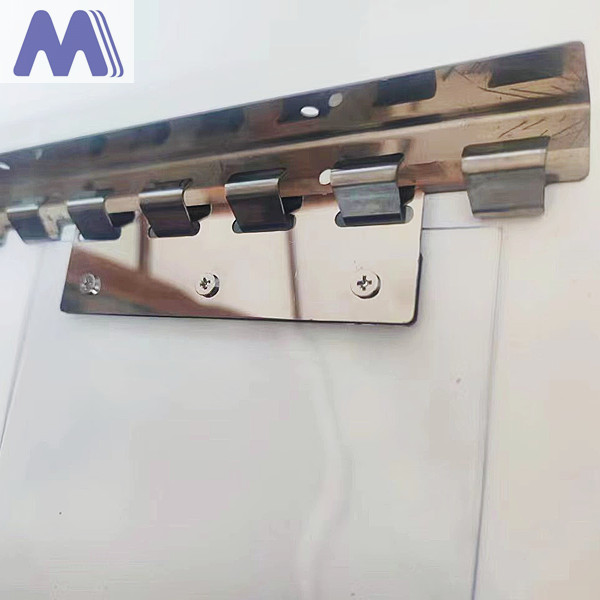
Commercial PVC strip curtain installations in warehouses and cold storage environments face relentless mechanical stress from daily forklift traffic, temperature differentials, and heavy personnel movement. Premature hardware degradation compromises facility thermal barriers and drives up operational costs when mounting rails and hanging clips fail unexpectedly. Operational uptime depends heavily on deliberate material grade selection and proactive quarterly maintenance cycles that address wear before complete system failure occurs.
Proactive hardware maintenance directly protects operational budgets by preventing strip misalignment, air leakage, and sudden component detachment in high-traffic commercial spaces. Facility maintenance teams can significantly extend system service life through systematic component inspections and timely replacements. Strategic component management ultimately reduces overall facility downtime and preserves temperature control efficiency across loading docks and internal partitions.
Material Grade Selection: How S.S.201, S.S.304, and Iron Dictate Lifespan
Material selection directly dictates corrosion resistance and operational longevity under specific environmental exposures, making it the most critical decision for facility procurement managers. S.S.304, S.S.201, and general iron each react differently to moisture, cleaning routines, and mechanical friction in commercial facilities.
Choosing the correct grade prevents premature rusting and protects structural integrity across diverse installations.
| Material | Moisture Suitability | Cleaning Compatibility | Primary Application Context |
|---|---|---|---|
| S.S.304 | High resistance to wet conditions | Withstands frequent chemical washdowns | Food processing and cold storage facilities |
| S.S.201 | Moderate resistance in dry to damp areas | Suitable for standard commercial cleaning | Offices and standard interior spaces |
| General iron | Low moisture tolerance without coating | Requires dry maintenance environments | Controlled indoor residential applications |
Operational environments determine whether stainless steel or general iron provides the necessary structural performance. Warehouses with high humidity or facilities utilizing aggressive chemical cleaning protocols require grade S.S.304 to prevent surface degradation. Conversely, general iron or S.S.201 may suffice in climate-controlled offices or dry residential spaces where exposure to moisture remains minimal.
Procurement teams must evaluate these exposure conditions before finalizing bulk purchase orders to avoid unexpected component failures. Specific corrosion timelines and salt-spray metrics remain variable depending on the exact cleaning agents deployed on-site, requiring buyers to request relevant technical documentation directly from the supplier.
Modular Component Purchasing for Efficient Hardware Replacement
Facility budgets benefit directly when purchasing strategies shift from whole-system replacements to targeted component orders. Targeted acquisition of individual hardware parts prevents unnecessary capital expenditure on fully functional infrastructure.
Structural Dimensions and Discrete Component Options
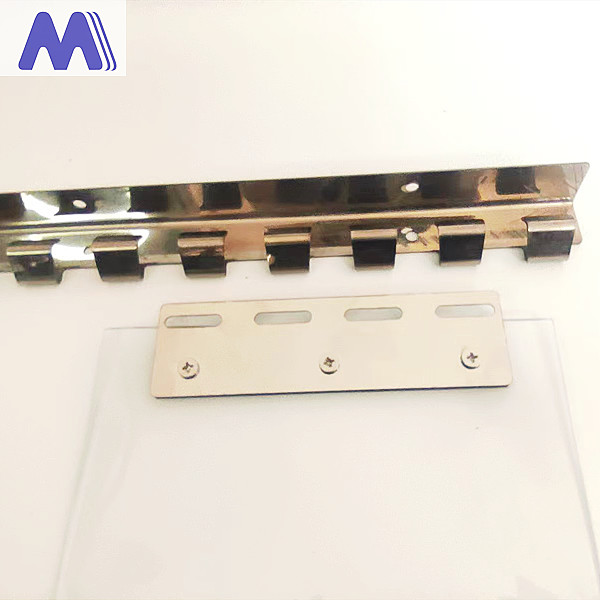
Dimensional accuracy dictates whether replacement clips integrate seamlessly with existing infrastructure without requiring on-site modifications. The 1-meter rail with a 1.2cm thickness serves as the primary mounting backbone. Maintenance staff must select compatible clip widths from the complete discrete range: 150mm, 200mm, 300mm, 400mm, and 500mm.
| Component Type | Available Size Options | Primary Material Options | Lead Time |
|---|---|---|---|
| Hanging Rail | Rail size: 1m (length) * 1.2cm (thickness) | S.S.201 / S.S.304 / General iron | 5-7 workdays after payment and requirement confirmed |
| Hanging Clips | 150mm, 200mm, 300mm, 400mm, and 500mm (width) | S.S.201 / S.S.304 / General iron | 5-7 workdays after payment and requirement confirmed |
Optimizing Inventory and Supply Lead Times
Stocking a balanced assortment of modular hardware widths prevents prolonged access point vulnerabilities during unexpected impacts. Procurement planners should coordinate specific batch requirements directly with the supplier to ensure precise dimensional matching for replacement parts.
Integrating Hardware Inspections into Quarterly Safety Check Routines
Quarterly facility safety schedules provide an optimal framework for systematic hardware inspections in high-traffic commercial environments. Facility teams that integrate these checks into routine operations catch minor defects before structural components fail entirely. Such systematic oversight ensures that loading bays and partition dividers remain fully functional throughout peak operational seasons.
High-traffic mechanical friction points demand targeted scrutiny during every scheduled facility review. Constant movement from personnel and heavy machinery frequently loosens fasteners and deforms hanging clips along the 1-meter rail. Catching these localized anomalies early prevents cascading damage to adjacent hardware segments.
Pivot points and connection joints require hands-on physical verification to detect micro-cracks and alignment shifts. Maintenance personnel check each individual clip—ranging across 150mm, 200mm, 300mm, 400mm, and 500mm widths—to ensure smooth swinging action without binding. Any restricted movement at these junctions signals premature wear that warrants immediate component isolation.
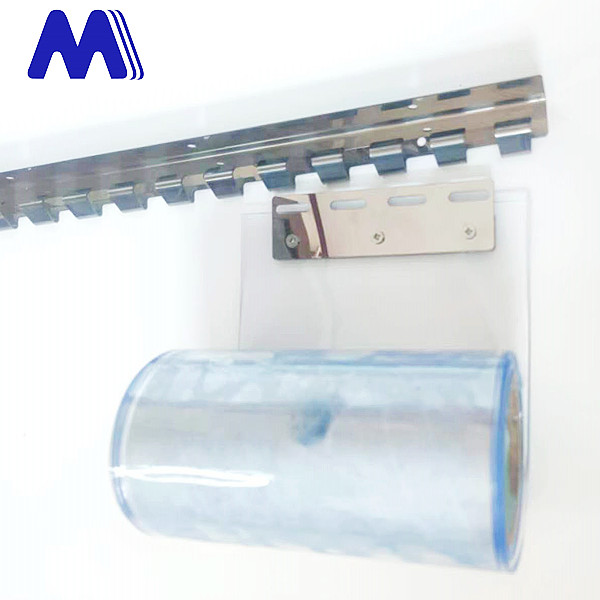
Routine inspection practices directly protect facility maintenance budgeting by averting catastrophic system breakdowns. Identifying loose fasteners before bolts shear off eliminates emergency repair labor costs and overnight expedited freight charges. Documenting wear patterns across successive quarters also helps procurement managers forecast exact replacement quantities for upcoming purchasing cycles.
Evaluating Replacement Cycles and Minimizing Facility Downtime
Proactive equipment audits safeguard thermal efficiency by preventing strip misalignment and air leakage before energy losses compound across high-traffic thresholds. Timely replacement of hanging hardware directly protects temperature control zones in cold storage and food-handling facilities where thermal stability is critical for inventory preservation.
Inventory Management for Modular Components
Facility managers maintain operational continuity by stocking replacement hanging components across the complete discrete size range of 150mm, 200mm, 300mm, 400mm, and 500mm widths. Storing these versatile clips locally prevents extended operational delays whenever mechanical impacts dislodge or deform individual fastening points.
Purchasing strategies focus on modular parts rather than complete system overhauls to optimize maintenance budgets and minimize replacement labor.
Auditing Framework for Hardware Degradation
Maintenance personnel utilize a structured inspection framework to assess existing hardware degradation during routine facility walk-throughs. Technicians examine fastener tension and pivot mobility to identify early signs of wear caused by continuous personnel and vehicle movement.
- Check hanging clips for lateral twisting or structural deformation along high-impact walkways.
- Verify bracket alignment to ensure strips overlap correctly and prevent chilled air infiltration.
- Inspect mounting fasteners for loosening resulting from constant mechanical vibration.
Documenting these inspection metrics allows facility supervisors to schedule component swaps during planned downtime rather than reacting to sudden operational failures.
Matching Hanging System Hardware to Heavy-Duty Facility Demands
High-frequency forklift operation and constant personnel movement subject overhead fixtures to continuous lateral impact and vibration. When hanging assemblies lack structural rigidity, repeated physical contact accelerates mechanical wear along mounting points and fastening interfaces. Industrial environments require robust mechanical anchoring to withstand kinetic stress without shifting alignment.
A structural thickness of 1.2cm combined with a standard 1-meter span provides the physical mass needed to absorb impact forces in demanding zones. Secure fastening mechanisms distribute downward and horizontal stress across the entire mounting surface rather than concentrating tension on isolated fasteners. This structural configuration prevents brackets from twisting or detaching when heavy rolling equipment brushes against the hanging assembly.
Balancing initial procurement costs against anticipated operational lifespan requires analyzing the specific mechanical demands of each installation zone. While general iron components offer lower upfront expenses, stainless steel variants provide superior long-term resilience in locations prone to moisture accumulation and frequent physical shocks. Facility planners must weigh these material expenditures against the labor costs associated with frequent component changeouts.
Material choices directly influence how well the installation resists permanent deformation under heavy daily operational strain. S.S.304 options deliver maximum resistance against structural fatigue in severe operating conditions, whereas S.S.201 serves moderate-load corridors effectively. Technical specifications and load limits remain subject to specific environmental variables, with exact performance boundaries to be confirmed with the supplier.
Compliance, Documentation, and Supplier Support for Facility Procurement
Regulatory oversight during facility audits requires clear validation trails that match the operational scope of warehouses, food-handling zones, and commercial spaces. Procurement officers navigating customs clearance and safety inspections must evaluate documentation availability before dispatching bulk purchase orders for PVC strip curtain installations.
CE certification is available for this product.
Purchasing teams coordinate file transmission timelines based on the specific destination port, cargo volume, and regional customs entry requirements.
Validating Documentation Requirements
Facility operators dealing with temperature-controlled spaces and loading dock partitions must verify that accompanying paperwork matches imported hardware batches. Sourcing agents inspect accompanying quality declarations to ensure they align with shipment manifests before installation teams mount rails above active pedestrian pathways.
Procurement Execution Steps
Purchasing teams preparing commercial orders need to establish direct communication channels with suppliers well in advance of the scheduled 5-7 workdays lead time. Securing necessary compliance paperwork early prevents inspection delays at local distribution centers and ensures smooth integration across homes, offices, and other commercial spaces.
Frequently Asked Questions
Material choice dictates how the hanging system reacts to high humidity and wet cleaning routines. S.S.304 provides robust corrosion resistance for areas exposed to frequent moisture, whereas S.S.201 and general iron suit dry or climate-controlled commercial spaces better. Selecting the correct grade for the operational environment prevents rust accumulation, directly reducing the frequency of unexpected hardware failures and structural degradation.
Yes, the modular design allows facility staff to swap out individual worn components rather than replacing the complete installation. The 1-meter rail accommodates clips in five distinct widths of 150mm, 200mm, 300mm, 400mm, and 500mm. This targeted replacement approach keeps maintenance expenses low and minimizes downtime in busy loading docks or internal partitions.
Modular hanging clips come in five precise discrete widths to match various spatial requirements: 150mm, 200mm, 300mm, 400mm, and 500mm. Procurement managers must verify that their curtain strip width aligns with one of these exact dimensions before placing bulk purchase orders. Leaving out intermediate sizes when planning replacements can lead to misaligned strips and compromised temperature control zones.
Safety routines should include quarterly checks focusing on mechanical friction points where hanging clips and mounting rails experience heavy movement. Inspectors must look for loose fasteners, pivot wear, and clip deformation caused by constant forklift and personnel traffic. Catching these issues early prevents complete system detachment and preserves the thermal barrier of cold storage spaces.
The standard processing timeframe takes 5-7 workdays following the completion of payment and the finalization of project specifications. Delivery schedules may vary slightly depending on the total order volume and the destination port for international shipments. Buyers should factor this lead time into their quarterly maintenance budgeting to avoid prolonged facility downtime.
The 1-meter rail features a robust 1.2cm thickness designed to absorb mechanical stress and constant vibration from daily personnel and machinery movement. Secure mounting combined with this structural gauge prevents the hanging system from bending or detaching under high-frequency operational loads. Proper installation protects the integrity of thermal barriers across high-traffic warehouse corridors.
Conclusion
Long-term operational efficiency relies directly on matching metal grades to specific site humidity and selecting modular widths that fit doorway traffic volumes. Facility managers balance initial expenditure against replacement frequency when ordering hardware for warehouses, offices, and commercial spaces.
Procuring correct rail thicknesses and clip sizes depends on daily mechanical wear variables and loading dock impact levels. Detailed quotes vary according to specific port destinations, order quantities, and chosen material specifications.