



Procurement Checklist for Stainless Bracket Strip Curtain Systems
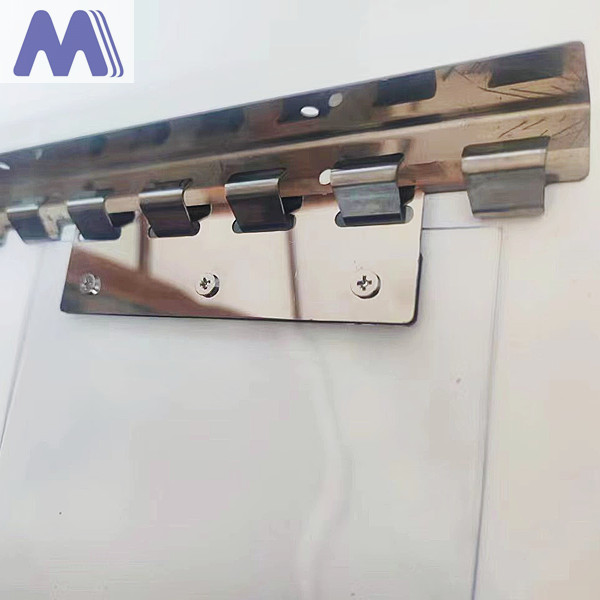
Industrial procurement for hanging systems requires rigorous quality controls to prevent material substitutions that lead to premature structural failure. Sourcing engineers and procurement managers often face risks such as unverified alloy grades and inconsistent rail thicknesses during supplier transitions.
This comprehensive verification checklist eliminates common sourcing vulnerabilities for industrial PVC strip curtain hanging systems.
By establishing precise evaluation steps for materials, dimensions, and documentation, import buyers protect their supply chains from non-compliant deliveries.
How to Match Material Grades S.S.201, S.S.304, and Iron to Environment
Confirm material grade options between S.S.201, S.S.304, and general iron based on project environmental needs and request mill test reports to prevent grade mismatches.
Evaluating Facility Environments for Metal Selection
Selecting the appropriate metal grade for hanging systems depends heavily on exposure levels, moisture conditions, and chemical contact points within the designated facility. General iron suits dry indoor environments where budget control takes priority over corrosion resistance. S.S.201 offers a balanced alternative for moderately humid commercial spaces, whereas S.S.304 serves corrosive areas prone to frequent washing or chemical exposure.
Verifying Alloy Compliance Through Documentation
Procuring raw metals without verifiable documentation exposes buyers to structural failures during active service. Requesting mill test reports directly from suppliers provides the necessary chemical and mechanical verification for each batch. Procurement teams should rely strictly on supplier confirmation without assuming unverified alloy compositions, ensuring full traceability before issuing bulk purchase orders.
Verifying Standard Rail Length and Thickness Specifications
Dimensional control during incoming quality checks prevents assembly failures when mounting curtain components. Drawing reviews establish mandatory geometric tolerances before production tooling is locked down.
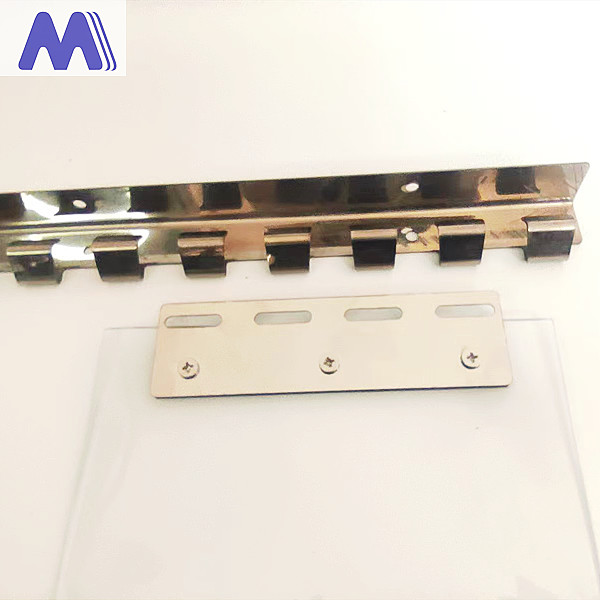
Engineering teams inspect rail dimensions to ensure a standard length of 1m. Each batch is measured on a flat surface to detect bowing or longitudinal distortion before hardware kits are packed for shipment.
Thickness Tolerances
Inspectors verify that rail thickness strictly measures 1.2cm to avoid dimensional inconsistency across large installation runs. Variations in section thickness reduce load-bearing capacity under constant operational movement.
Suppliers must provide inspection sheets showing that steel sections meet thickness benchmarks. Buyers address buyer pain points regarding dimensional consistency during initial drawing reviews by defining maximum allowable deviations on technical drawings.
- Length verification confirms every rail measures precisely 1m.
- Cross-section checks ensure the 1.2cm thickness remains uniform from end to end.
- Drawing sign-offs lock in these exact parameters to eliminate guesswork on the factory floor.
Selecting from the Complete Five-Tier Clip Width Range
Precise hardware matching prevents installation gaps during on-site assembly across various architectural layouts.
Full Dimension Breakdown
Procuring the correct hardware requires selecting from the complete set of five clip widths: 150mm, 200mm, 300mm, 400mm, and 500mm.
| Component Size Category | Available Dimension Options | Designated Application Scope |
|---|---|---|
| Standard Clip Width Tier 1 | 150mm | Residential and commercial partition setups |
| Standard Clip Width Tier 2 | 200mm | Residential and commercial partition setups |
| Standard Clip Width Tier 3 | 300mm | Residential and commercial partition setups |
| Standard Clip Width Tier 4 | 400mm | Residential and commercial partition setups |
| Standard Clip Width Tier 5 | 500mm | Residential and commercial partition setups |
Component Allocation
Individual clip widths match corresponding PVC strip curtain panel dimensions accurately to ensure proper structural hanging.
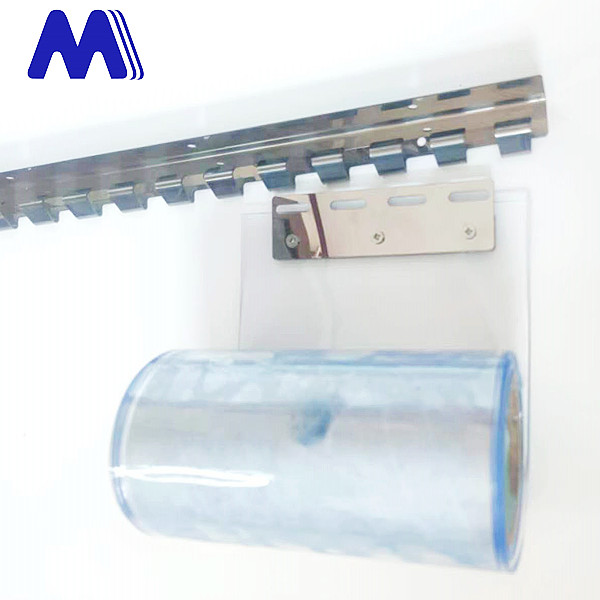
Procurement teams must ensure the complete range is represented without omitting any required size tier during bulk order finalization.
Evaluating CE Certification Files and Documentation Requirements
Obtaining Verification Documentation
CE certification is available for this product upon request, and procurement teams must request official verification paperwork directly. Tentative phrasing is applied to unverified issuing bodies since specific validation details and regulatory codes remain unstated in the baseline specifications.
Compliance validation relies exclusively on documents provided by the source rather than extrapolated legal claims.
Preventing Regulatory Overreach
To maintain strict compliance boundaries, avoid linking the documentation to any specific EU regulation, directive, or standard family name. Unlisted standards or external directives must not be associated with the imported hanging hardware.
Sourcing engineers verify that documentation stays strictly within the boundaries of the available files.
Establishing Reliable Lead Times After Requirement Confirmation
Operational stability in cross-border supply chains relies on precise production scheduling tied to definitive payment clearing dates. Delivery delays frequently stem from ambiguous technical instructions rather than raw capacity constraints within the manufacturing facility. Importers mitigate this exposure by locking production timelines strictly upon finalized drawing sign-offs.
Set clear expectations for lead times of 5-7 workdays after payment. This duration reflects baseline processing capabilities for standard bracket configurations utilized in homes, offices, and other commercial spaces. Production schedules remain fluid until financial transactions clear local banking clearinghouses.
The manufacturing countdown starts only after all technical criteria achieve written sign-off. Any alteration to clip width selections or alloy designations resets the scheduling window immediately. Sourcing teams enforce this rule to prevent uncoordinated workshop queuing.
Incorporate agreed lead times directly into the formal purchase order terms. Contractual binding prevents unilateral schedule extensions during peak seasonal manufacturing surges.
Controlling Schedulable Variables
Shipment dates depend heavily on the designated destination port and regional freight consolidation schedules. Transit velocity fluctuates according to seasonal shipping lane congestion rather than factory output speed.
Bulk volume orders exceeding standard batch thresholds adjust production windows proportionally based on raw material availability. Buyers incorporate these buffer periods into downstream distribution plans.
Applying AQL Quality Control and Pre-Shipment Inspection Thresholds
Rigorous verification protocols protect overseas import programs from structural failures caused by unverified production variance. Factory floor evaluations depend strictly on defined acceptance thresholds before export clearance is granted.
Quality assurance teams execute structured assessments right before cargo dispatch. Operational checks target dimensional tolerances alongside mechanical strength, confirming that every batch matches agreed project parameters.
Operational Inspection Parameters
| Dimension Category | Evaluated Parameter | Inspection Method |
|---|---|---|
| Rail Length | 1m length | Precision caliper measurement |
| Rail Thickness | 1.2cm thickness | Digital micrometer check |
| Clip Widths | 150mm, 200mm, 300mm, 400mm, 500mm | Full-range gauge sampling |
Sampling inspections apply standard AQL limits to detect surface defects and structural inconsistencies across bulk production runs. Finished goods undergo rigorous load-bearing tests to verify stability under operational stresses.
Inspections confirm that surface finishes remain uniform across all material options. Shipments failing these thresholds are rejected prior to final packaging and export documentation issuance.
Frequently Asked Questions
Incoming inspection teams must measure the hanging rail to verify a fixed length of 1m and a section thickness of 1.2cm. Any deviation from these specified dimensions during batch checks indicates potential tooling misalignment or forming errors, which requires immediate quarantine of the affected lot prior to warehouse staging.
Compliance documentation requests should focus on obtaining the available CE certification files and corresponding test reports directly from the manufacturer. Because issuer details are not pre-printed, verification teams must cross-check the received documentation against the specific batch paperwork and purchase order requirements before port clearance.
Production lead times of 5 to 7 workdays begin strictly after the payment has cleared and the final technical requirements have been fully confirmed in writing. Any modifications to clip width distribution or material grade after this confirmation point will reset the production schedule.
Pre-shipment inspection procedures incorporate standard Acceptable Quality Limit sampling plans to evaluate surface finish and structural integrity. Inspectors perform physical checks on sample brackets to verify that load-bearing performance aligns with the ordered material grade before container loading is authorized.
Verification depends on cross-referencing incoming shipment markers against mill test documentation provided for the specific production batch. Sourcing teams should audit chemical and mechanical test certificates before issuing final balance payments, ensuring the delivered metal matches the specified material grade without relying on visual inspection alone.
Discovered variances require immediate quarantine of the affected pallet and photographic documentation of the rail length and thickness measurements. Procurement teams then submit the inspection report to initiate the contractual remedy process, with resolution terms depending on the affected volume and pre-agreed purchase order conditions.
Conclusion
Initiating the verification checklist requires direct coordination with bracket manufacturers regarding specific project demands. Import buyers secure better outcomes by requesting mill test reports and draft quotation files simultaneously.
Purchasing teams evaluate preliminary cost estimates against freight variables tied to the destination port and order volume. Final commercial terms depend heavily on these variables before formal agreements are signed.